
Saint Martin, in my opinion the most famous of the parisian ghost stations. It had haunted my dreams for over three years since my last visit. I had come so close, a small glimpse through a keyhole the only reward for the nights efforts, but tonight was the night. Finally after several years of browsing pictures and reports, it was my turn to visit!
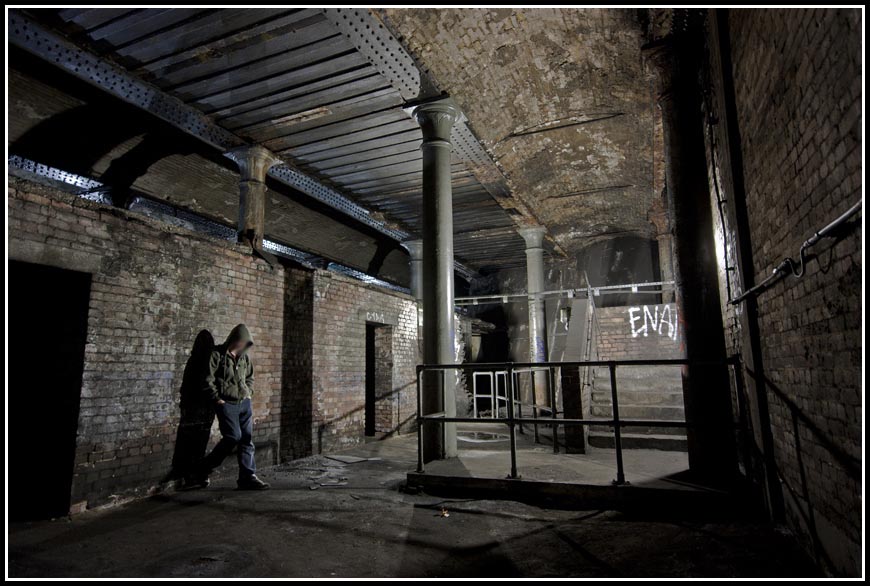
St Mary’s Station opened in 1884 and served the Hammersmith & City and District lines. The station closed in 1938 due to the closer relocation of Aldgate East. The station building was destroyed in 1940 when it was hit by a bomb during WWII. During the war the St Mary’s was converted into air-raid shelters, the outer walls of which are visible from passing trains.

Well, accidentally deleted what i wrote, back soon?

For me this was the end of the line, the trains sliding doors were open and we were at my stop. With the driver signaling he was about to depart i stepped off, the small taste of the London underground unforgettable. Thankfully however the final stop just so happened to be the deepest station London ever built, the perfect way to end!

As with most tube related exploits, they tend to have only one means of access. Like a maze without an exit, once in the only way out would be to backtrack to the start. As such, like a rat cornered in a hole, should exit be closed, locked or blocked by workers, you genuinely have no form of escape, or anywhere to hide (In most cases). You fate resting in that at the entrance be it workers, police or a train.

Opened in 1868 as St. John’s Wood Road, Lord’s is sitated on the Metropolitan & St. John’s Wood Railway (Now, Metropolitan Line). The station was renamed St Johns Wood on the 1st April, 1925 and then Lords on the 11 June, 1939, just five months before the station closed as a result of services transferring to the new deep-level tunnels between Finchley Road and Baker Street.


